posted by ![[personal profile]](https://www.dreamwidth.org/img/silk/identity/user.png) is3 at 05:38pm on 27/05/2021
is3 at 05:38pm on 27/05/2021
is3 at 05:38pm on 27/05/2021About the birthplace of Buddha in Lumbini, Nepal, Wikipedia reports:
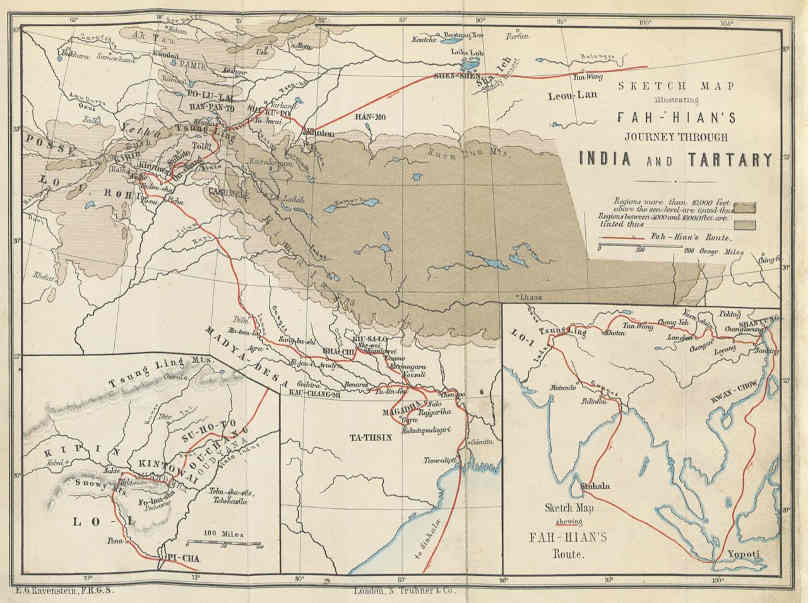
That is, Alois Führer identified this place, referring to the records of these Chinese pilgrims, and today, in addition to the inscription on the pillar discovered by the Führer, the records of these monks are regarded as evidence of the reliability of determining the place of birth of the founder of Buddhism. The Wikipedia article on Faxian refers to his travel itinerary: "Faxian's journey through India and Tartary."
This is a map from the book Travels of Fah-Hian and Sung-Yun, Buddhist pilgrims: from China to India, published about a century and a half ago. In addition to the map, the text of the book repeatedly mentions the Tartars and Tartaria, describing the events that took place almost a millennium before the birth of Genghis Khan (it is noteworthy that the modern Wikipedia article about Faxian does not mention Tataria and Tatars in the description of the route of his pilgrimage). I will cite some quotes from this book with a mention of the Tatars.
О месте рождения Будды в непальском Лумбини википедия сообщает:
То есть, Алоис Фюрер определил это место, ссылаясь на записи этих китайских паломников, а сегодня, помимо обнаруженной Фюрером надписи на столбе, записи этих монахов расцениваются, как свидетельства достоверности определения места рождения основоположника буддизма. Статья википедии о Фасяне ссылается на маршрут его путешествия: "Путешествие Фасяня через Индию и Татарию".
Это карта из книги "Путешествия Фасяня и Сюаньцзаня, буддийских паломников: из Китая в Индию", опубликованной около полутора столетий назад. Помимо карты, текст книги многократно упоминает татар и Татарию (Тартарию), описывая события, произошедшие почти за тысячелетие до рождения Чингисхана (примечательно, что современная статья википедии о Фасяне не упоминает Татарию и татар в описании маршрута его паломничества). Приведу перевод некоторых цитат из этой книги с упоминанием татар.
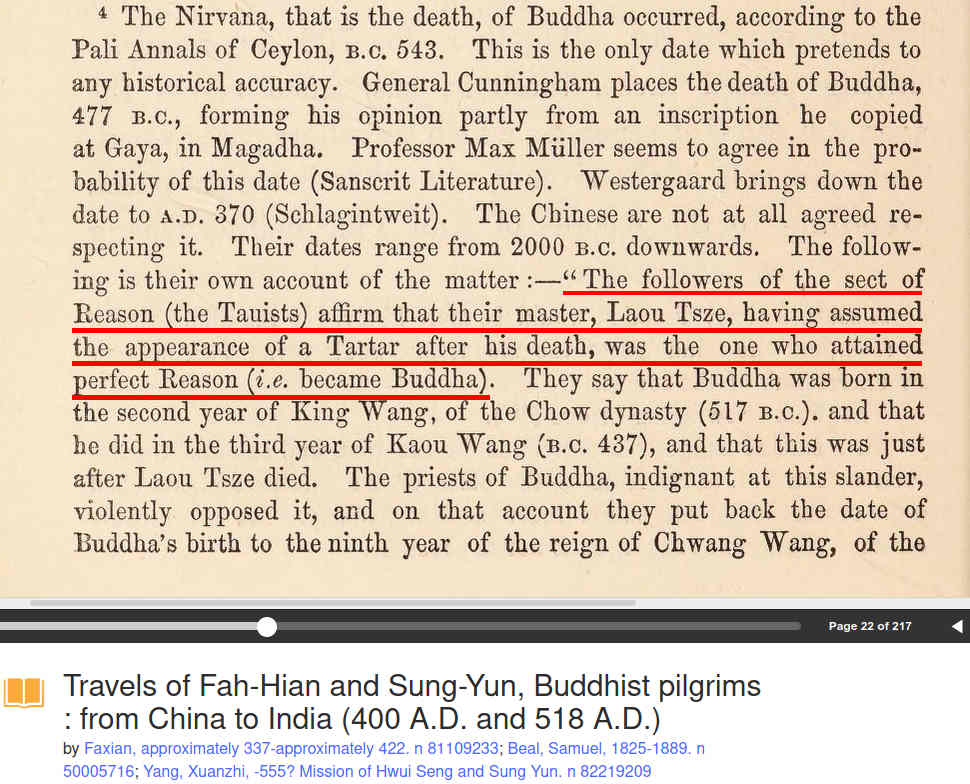
( Read more... )
In 1896, General Khadga Samsher Rana and Alois Anton Führer discovered a great stone pillar at Rupandehi, according to the crucial historical records made by the ancient Chinese monk-pilgrim Xuanzang in the 7th century CE and by another ancient Chinese monk-pilgrim Faxian in the early 5th century CE. The Brahmi inscription on the pillar gives evidence that Ashoka, emperor of the Maurya Empire, visited the place in 3rd-century BCE and identified it as the birth-place of the Buddha.
That is, Alois Führer identified this place, referring to the records of these Chinese pilgrims, and today, in addition to the inscription on the pillar discovered by the Führer, the records of these monks are regarded as evidence of the reliability of determining the place of birth of the founder of Buddhism. The Wikipedia article on Faxian refers to his travel itinerary: "Faxian's journey through India and Tartary."
This is a map from the book Travels of Fah-Hian and Sung-Yun, Buddhist pilgrims: from China to India, published about a century and a half ago. In addition to the map, the text of the book repeatedly mentions the Tartars and Tartaria, describing the events that took place almost a millennium before the birth of Genghis Khan (it is noteworthy that the modern Wikipedia article about Faxian does not mention Tataria and Tatars in the description of the route of his pilgrimage). I will cite some quotes from this book with a mention of the Tatars.
О месте рождения Будды в непальском Лумбини википедия сообщает:
В 1896 году генерал Хадга Самшер Рана и Алоис Антон Фюрер обнаружили большой каменный столб в Рупандехи, согласно важнейшим историческим записям, сделанным древнекитайским монахом-паломником Сюаньцзанем в 7 веке н.э. и другим древнекитайским монахом-паломником Фасянем в начале 5 века н.э.. Надпись на столбе на языке брахми свидетельствует о том, что Ашока, император империи Маурья, посетил это место в III веке до н.э. и определил его как место рождения Будды.
То есть, Алоис Фюрер определил это место, ссылаясь на записи этих китайских паломников, а сегодня, помимо обнаруженной Фюрером надписи на столбе, записи этих монахов расцениваются, как свидетельства достоверности определения места рождения основоположника буддизма. Статья википедии о Фасяне ссылается на маршрут его путешествия: "Путешествие Фасяня через Индию и Татарию".
Это карта из книги "Путешествия Фасяня и Сюаньцзаня, буддийских паломников: из Китая в Индию", опубликованной около полутора столетий назад. Помимо карты, текст книги многократно упоминает татар и Татарию (Тартарию), описывая события, произошедшие почти за тысячелетие до рождения Чингисхана (примечательно, что современная статья википедии о Фасяне не упоминает Татарию и татар в описании маршрута его паломничества). Приведу перевод некоторых цитат из этой книги с упоминанием татар.
_FAH-HIAN'S_ROUTE_THROUGH_INDIA_AND_TARTARY.jpg)
( Read more... )
There are no comments on this entry. (Reply.)