
![[personal profile]](https://www.dreamwidth.org/img/silk/identity/user.png)


(no subject)
The internal view of polygonal masonry in Peru
The ancient technology of casting stone blocks in South America
Different manufacturing techniques of polygonal masonry blocks
Concrete polygonal masonry technology in Peru. New evidence
Sources:
#^https://rblogger.ru/2014/06/16/ollantaytambo
 Вспомнить прошлое, чтобы узнать будущее... wrote the following post Sun, 14 Apr 2019 16:17:40 +0300
#america #antiquity #art #artefacts #casting #history #hoax #marble #masonry #past #peru #revision
My articles about the differences in methods of manufacturing blocks of polygonal masonry, as well as about the version with a description of the casting technology (or rather, the molding of such masonry) made of geo-concrete - caused a heated discussion:
The ancient technology of casting stone blocks in South America
Different manufacturing techniques of polygonal masonry blocks
Concrete polygonal masonry technology in Peru. New evidence
There were many comments, the authors of which, in spite of the facts and explanations given in the articles, argued that the blocks was rubbed to each other.
The best way to verify this is to repeat such a laying with just such a technique with obtaining exactly this quality of block mating. But no one ever made an attempt to repeat it. Well, of course, builders have spent dozens of years for grinding in, and modern man has so much time. But that's why skeptics believe that the ancients did not value time? And that the ghostly result over many years would not be expected by any customer, as now.
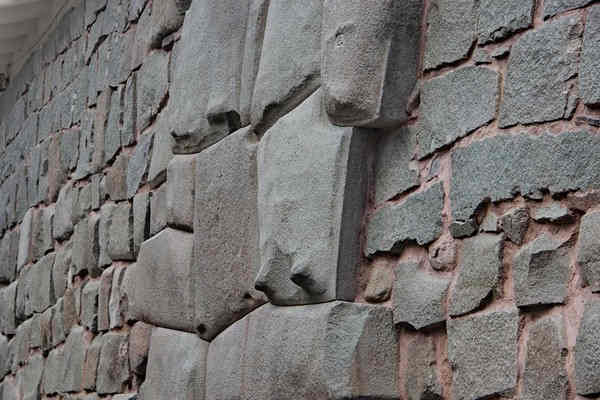
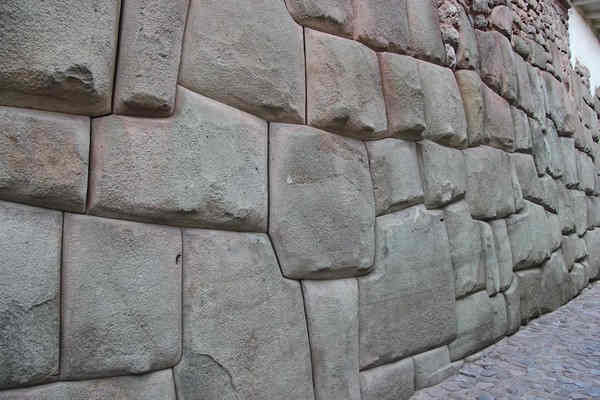
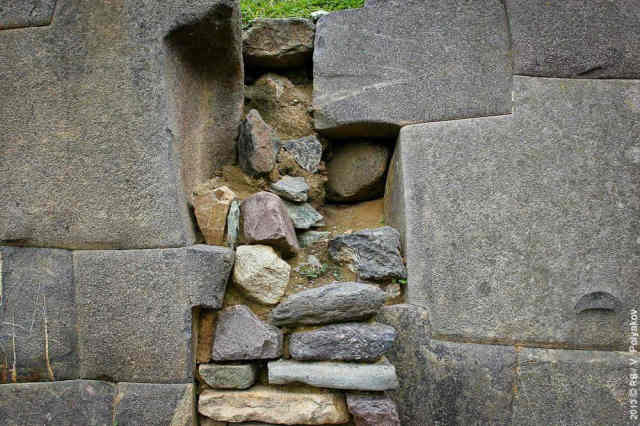
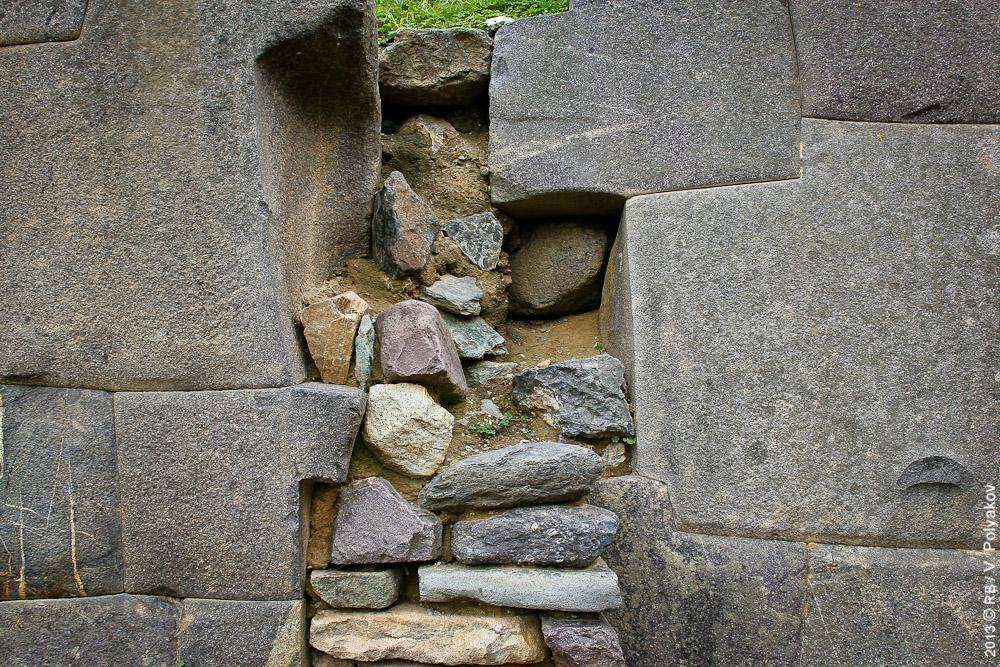
The surviving segment of polygonal masonry. The rest is a rubble stone on the solution. We see that there are rims on the side faces (which were internal). Could it have survived the process of grinding stones? Scarcely.
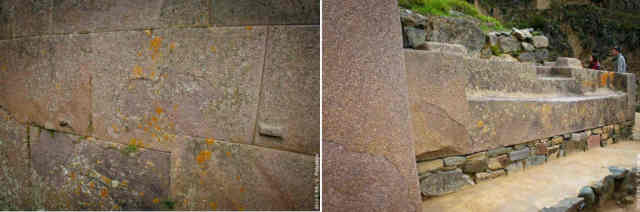
In this article, I propose to examine photos that show the inner edges of the destroyed sections of polygonal masonry in Peru. Photos posted by Evgeny Berzin in the Travel group and artifacts. Peru, Bolivia, Mexico, Middle East on facebook.
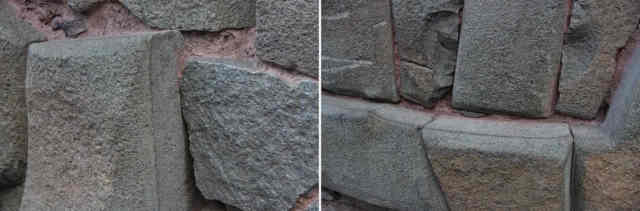
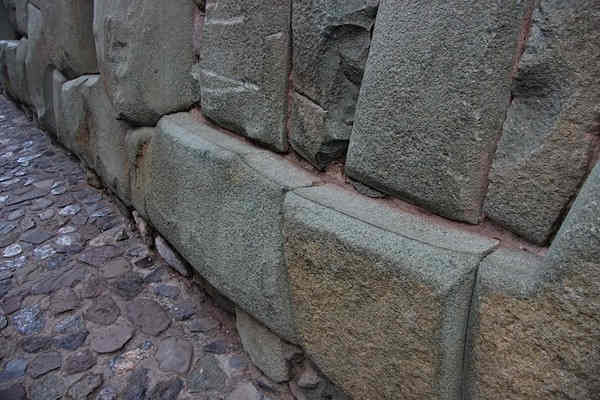
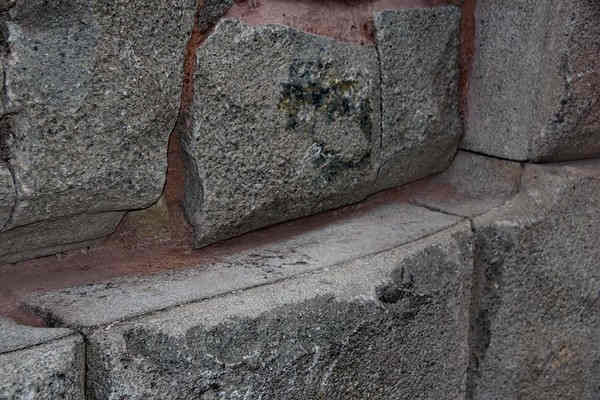
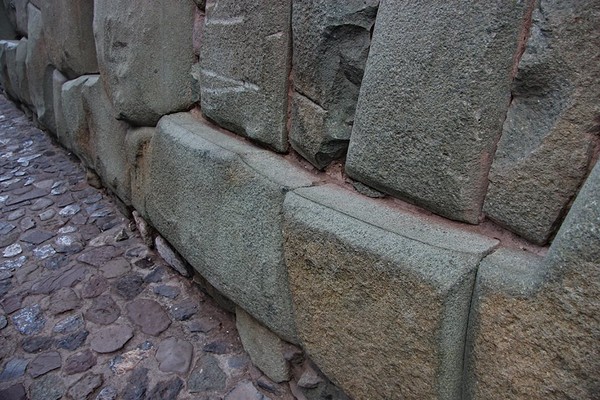
The rim on the edges close-up
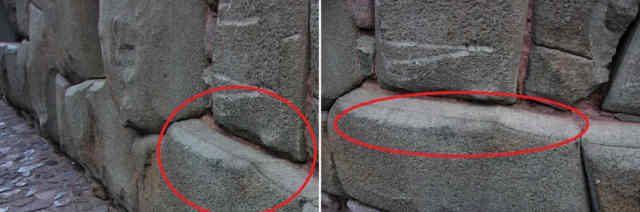
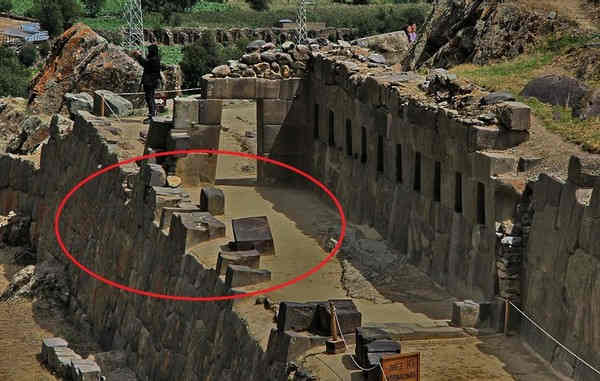
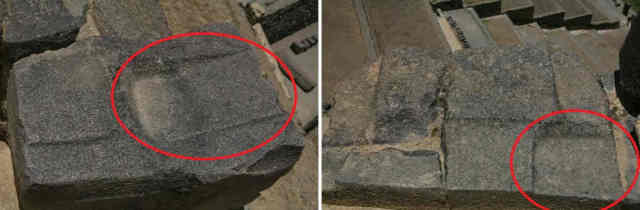
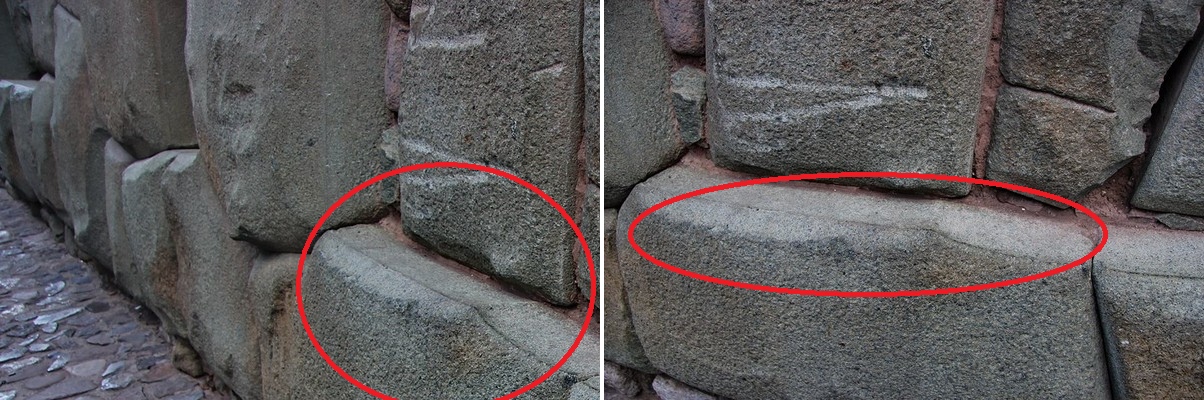
My opinion is that if this was achieved by grinding, then such a rim could not remain. And it was formed due to the fact that the higher unit pressed into the lower one, since All masonry was molded from plastic material, geo-concrete.
I marked these places with a visible border.
The blocks themselves, while gaining strength, were still expanding, turned out like kegs, and when expanding, pressed each other with adjacent faces. Even if a small volume remained unfilled by rock, it was filled during expansion. That is why we see such a picture of the fantastic contact of blocks of polygonal masonry.
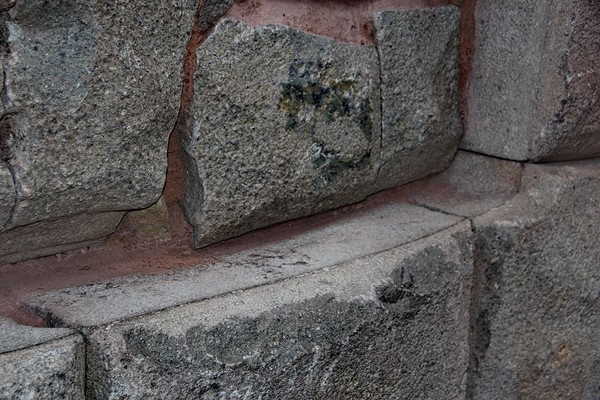
When moving the stone back and forth in the process of grinding, it would repeat the contour of the underlying block and this border, even if it was originally worn out. But there are no signs of this.
I propose to think: in general, is it really possible to grind the stone to the neighboring ones in several planes? Even with a superficial reflection on the process, it becomes clear that the lower edge under the weight of the stone will wear out faster than the side. And if the side face is oblique or curvilinear, then pairing along them with simultaneous contact with all faces will not work. Face abrasion should be uniform.
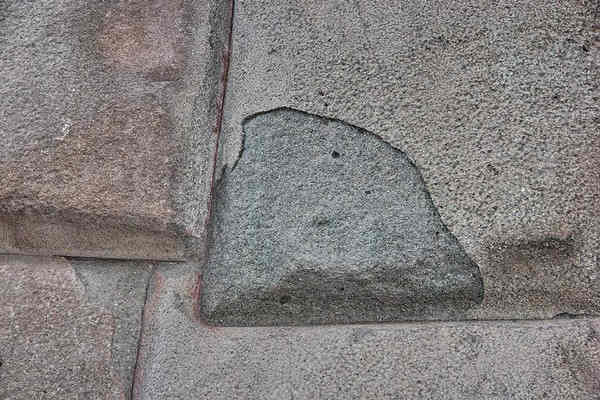
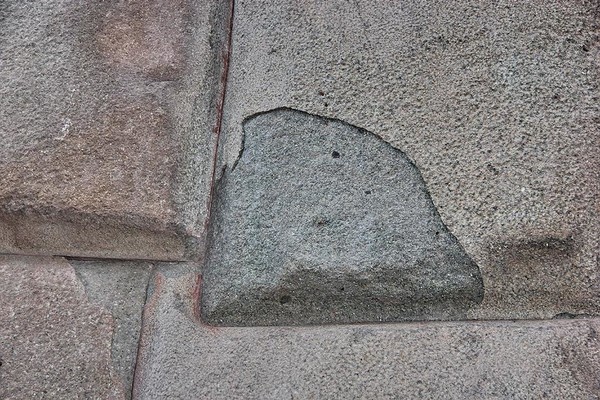
The fact that this block is a casting with a subsequent increase in the volume of the stone, this photo shows:
Recall photos of growing stones. There, too, is the same peeling of the rock as the shell. The following happened in this block: the surface layer hardened very quickly (reaction from the CO2 of the air), and the internal masses, increasing, broke this “shell”.
Bloated blocks. This form of processing and grinding stones can not be explained.
The following photos are from this location:
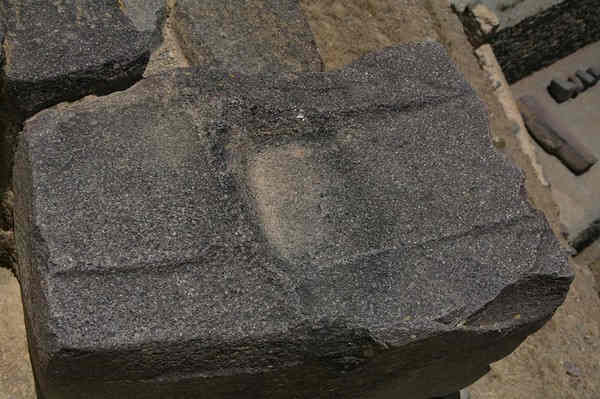
How can attrition such internal faces of blocks? This is exactly the depression in the plastic mass.
Another open block with earlier inner edges. Also inward bulging in its mass.
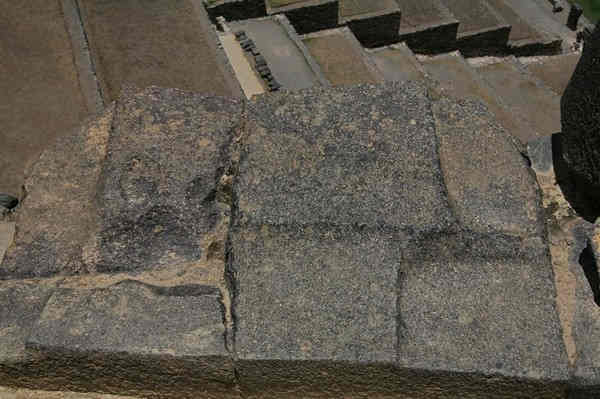
This photograph shows that the upper unit stood immediately on the lower two and left a mark on them. No grinding in such a trace can not be explained.
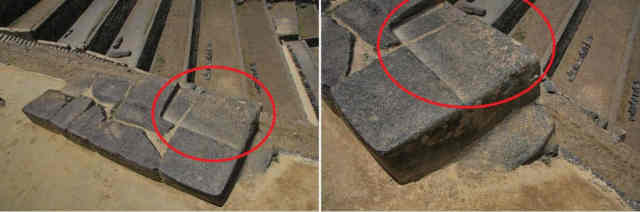
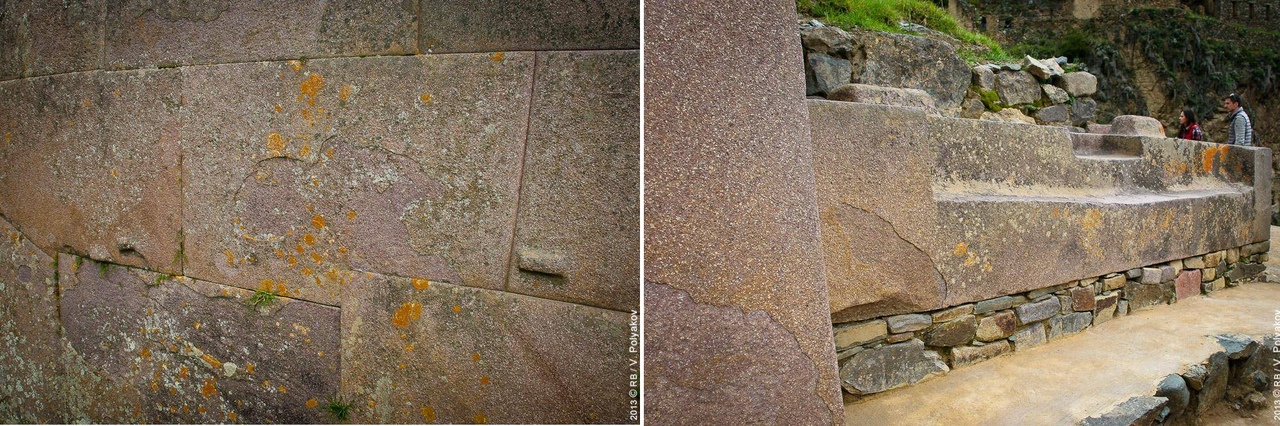
The Sacred Valley of the Incas. And this inner corner in the stone on the left how to grind?
On these blocks, the “shell” also gradually fell off in the process of expanding the block.
I think that these examples clearly show that the lapping of blocks in a polygonal masonry of such a level is impossible. This can only be built by molding concrete. What is geobeton and where it came from (questions from new readers) - I wrote in previous articles.
Sources:
#^https://rblogger.ru/2014/06/16/ollantaytambo
Вспомнить прошлое, чтобы узнать будущее... wrote the following post Sun, 14 Apr 2019 16:17:40 +0300Внутренняя структура полигональной кладки в Перу
#^Внутренняя структура полигональной кладки в Перу
Мои статьи про отличия приемов изготовления блоков полигональных кладок, а так же про версию с описанием технологии литья (вернее формовки такой кладки) из геобетона - вызвали бурную дискуссию:
Древняя технология литья каменных блоков в Южной Америке
Разные технологии изготовления блоков полигональной кладки
Бетонная технология полигональной кладки в Перу. Новые доказательства
Было много комментариев, авторы которых не смотря на приведенные в статьях факты и объяснения утверждали, что блоки притирали один к другому.
Лучший способ проверить это – повторить такую кладку именно таким приемом с получением именно такого качества сопряжения блоков. Но никто за все время не сделал даже попытку это повторить. Ну, как же, на притирку строители тратили десятки лет, а у современного человека столько времени нет. Только вот почему скептики считают, что у древних время не ценилось? И что призрачный результат через многие годы ждать не стал бы ни один заказчик, как и сейчас.
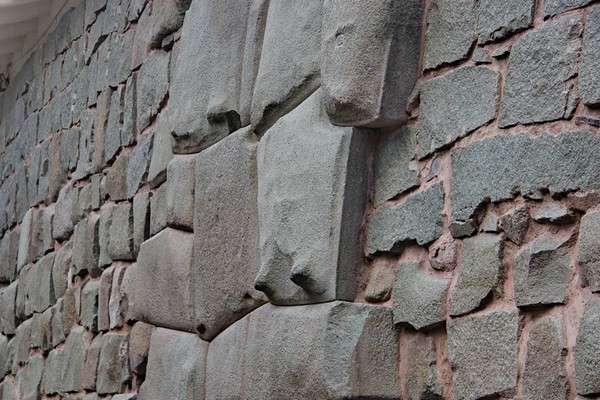
Уцелевший сегмент полигональной кладки. Остальное – бутовый камень на растворе. Мы видим, что на боковых гранях (которые были внутренние) есть каемки. Они смогли бы уцелеть при процессе притирания камней? Врят ли.
В этой статье предлагаю изучить фотографии, которые показывают внутренние грани разрушенных участков полигональной кладки в Перу. Фотографии выложил Евгений Берзин в группе Путешествия и артефакты. Перу, Боливия, Мексика, Ближний Восток в facebook.
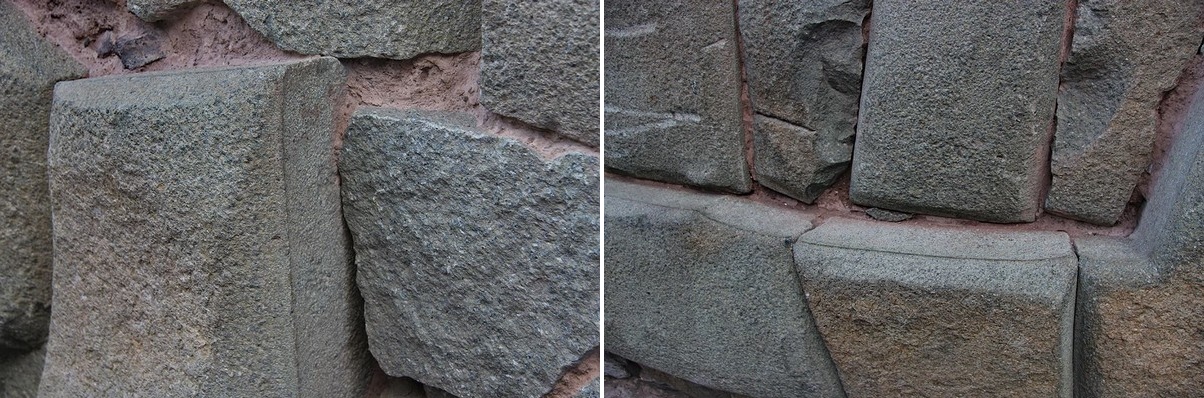
Каемки на гранях крупным планом
Мое мнение, что если это достигалось притиранием, то такой каемки не могло остаться. А образована она из-за того, что вышестоящий блок вдавил в нижний, т.к. вся кладка была сформована из пластичного материала, геобетона.
Я обвел эти места с видимой каемкой
Сами блоки при наборе прочности еще расширялись, получились как бочонки и при расширении давили соседними гранями друг на друга. Даже если остался незаполненный породой небольшой объем, то он заполнялся при расширении. Именно по-этому мы видим такую картину фантастического соприкосновения блоков полигональной кладки.
При движении камня вперед-назад в процессе притирки, он повторял бы контур нижележащего блока и эта каемка, даже если она была изначально – стерлась.
Предлагаю по-размыслить: вообще реально притереть камень к соседними в нескольких плоскостях? Даже при поверхностном размышлении о процессе, становится понятным, что нижняя грань под весом камня будет истираться быстрее чем боковые. А если боковая грань наклонная или криволинейна, то сопряжения по ним с одновременным соприкосновением ко всем граням – не получится. Истирание граней должно быть равномерным.
То, что этот блок – отливка с последующим увеличением объема камня, говорит эта фотография:
Вспомните фотографии тровантов, растущих камней. Там тоже идет такое же шелушение породы как скорлупы. В этом блоке произошло следующее: поверхностный слой очень быстро затвердел (реакция с СО2 воздуха), а внутренние массы, увеличиваясь, поломали эту «скорлупу».
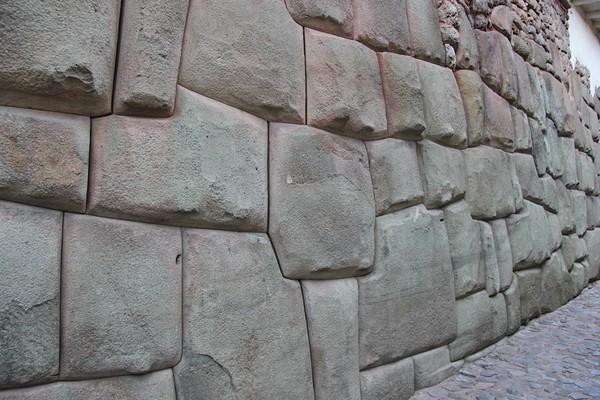
Раздутые блоки. Такую форму обработкой и притиркой камней не объяснить.
Следующие фотографии – из этого места:
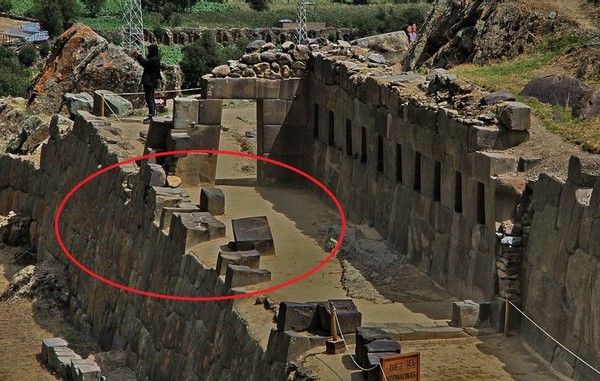
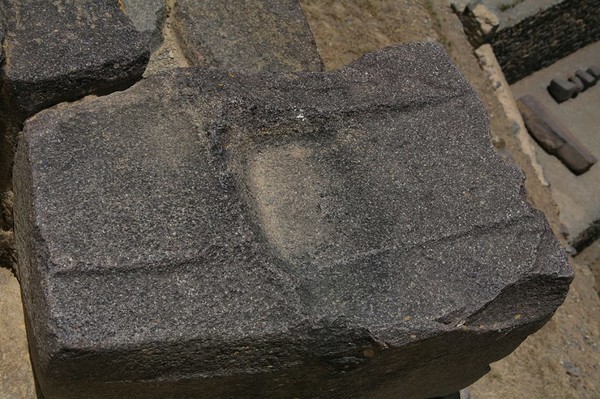

Как можно объяснить притиркой такие внутренние грани блоков? Это именно вдавленности в пластичную породу.
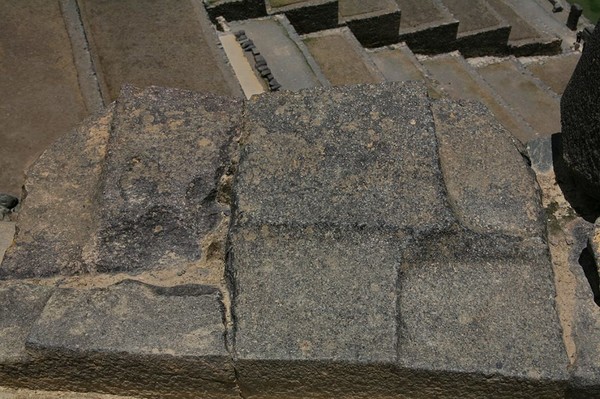
Еще открытый блок с ранее внутренними гранями. Так же вдавленности в его массе.

На этой фотографии видно, что верхний блок стоял сразу на нижних двух и оставил в них след. Никаким притиранием такой след не объяснить.
Священная долина инков. А этот внутренний угол в камне слева как притереть?
На этих блоках «скорлупа» тоже по-понемногу отваливалась в процессе расширения блока.
Думаю, что эти примеры ясно показывают, что притирка блоков в полигональной кладке такого уровня – невозможна. Это построить возможно только путем формовки геобетона. Что это за геобетон и откуда он взялся (вопросы новых новых читателей) – я писал в предыдущих статьях.
Источники:
https://my.mail.ru/bk/sibved/photo/1249
https://www.facebook.com/groups/1823201454583514/
https://rblogger.ru/2014/06/16/ollantaytambo
***
Что бы поддержать журнал, перейдите по ссылке на эту статью в Яндекс.Дзен. Можете прочесть там комментарии и оставить свой.
Если Вам нравится информация в этом журнале и статьи, которые размещает автор, то его можно поблагодарить здесь. Мотивация не бывает лишней. Благодарю всех, кто выразил свою признательность за время существования журнала!
Группы в соцсетях и другие площадки, где выкладываются ссылки и материалы журнала:
ВК-sibved
ФБ-sibved
Яндекс.Дзен
#^Внутренняя структура полигональной кладки в Перу
Мои статьи про отличия приемов изготовления блоков полигональных кладок, а так же про версию с описанием технологии литья (вернее формовки такой кладки) из геобетона - вызвали бурную дискуссию:
Древняя технология литья каменных блоков в Южной Америке
Разные технологии изготовления блоков полигональной кладки
Бетонная технология полигональной кладки в Перу. Новые доказательства
Было много комментариев, авторы которых не смотря на приведенные в статьях факты и объяснения утверждали, что блоки притирали один к другому.
Лучший способ проверить это – повторить такую кладку именно таким приемом с получением именно такого качества сопряжения блоков. Но никто за все время не сделал даже попытку это повторить. Ну, как же, на притирку строители тратили десятки лет, а у современного человека столько времени нет. Только вот почему скептики считают, что у древних время не ценилось? И что призрачный результат через многие годы ждать не стал бы ни один заказчик, как и сейчас.
Уцелевший сегмент полигональной кладки. Остальное – бутовый камень на растворе. Мы видим, что на боковых гранях (которые были внутренние) есть каемки. Они смогли бы уцелеть при процессе притирания камней? Врят ли.
В этой статье предлагаю изучить фотографии, которые показывают внутренние грани разрушенных участков полигональной кладки в Перу. Фотографии выложил Евгений Берзин в группе Путешествия и артефакты. Перу, Боливия, Мексика, Ближний Восток в facebook.
Каемки на гранях крупным планом
Мое мнение, что если это достигалось притиранием, то такой каемки не могло остаться. А образована она из-за того, что вышестоящий блок вдавил в нижний, т.к. вся кладка была сформована из пластичного материала, геобетона.
Я обвел эти места с видимой каемкой
Сами блоки при наборе прочности еще расширялись, получились как бочонки и при расширении давили соседними гранями друг на друга. Даже если остался незаполненный породой небольшой объем, то он заполнялся при расширении. Именно по-этому мы видим такую картину фантастического соприкосновения блоков полигональной кладки.
При движении камня вперед-назад в процессе притирки, он повторял бы контур нижележащего блока и эта каемка, даже если она была изначально – стерлась.
Предлагаю по-размыслить: вообще реально притереть камень к соседними в нескольких плоскостях? Даже при поверхностном размышлении о процессе, становится понятным, что нижняя грань под весом камня будет истираться быстрее чем боковые. А если боковая грань наклонная или криволинейна, то сопряжения по ним с одновременным соприкосновением ко всем граням – не получится. Истирание граней должно быть равномерным.
То, что этот блок – отливка с последующим увеличением объема камня, говорит эта фотография:
Вспомните фотографии тровантов, растущих камней. Там тоже идет такое же шелушение породы как скорлупы. В этом блоке произошло следующее: поверхностный слой очень быстро затвердел (реакция с СО2 воздуха), а внутренние массы, увеличиваясь, поломали эту «скорлупу».
Раздутые блоки. Такую форму обработкой и притиркой камней не объяснить.
Следующие фотографии – из этого места:
Как можно объяснить притиркой такие внутренние грани блоков? Это именно вдавленности в пластичную породу.
Еще открытый блок с ранее внутренними гранями. Так же вдавленности в его массе.
На этой фотографии видно, что верхний блок стоял сразу на нижних двух и оставил в них след. Никаким притиранием такой след не объяснить.
Священная долина инков. А этот внутренний угол в камне слева как притереть?
На этих блоках «скорлупа» тоже по-понемногу отваливалась в процессе расширения блока.
Думаю, что эти примеры ясно показывают, что притирка блоков в полигональной кладке такого уровня – невозможна. Это построить возможно только путем формовки геобетона. Что это за геобетон и откуда он взялся (вопросы новых новых читателей) – я писал в предыдущих статьях.
Источники:
https://my.mail.ru/bk/sibved/photo/1249
https://www.facebook.com/groups/1823201454583514/
https://rblogger.ru/2014/06/16/ollantaytambo
***
Что бы поддержать журнал, перейдите по ссылке на эту статью в Яндекс.Дзен. Можете прочесть там комментарии и оставить свой.
Если Вам нравится информация в этом журнале и статьи, которые размещает автор, то его можно поблагодарить здесь. Мотивация не бывает лишней. Благодарю всех, кто выразил свою признательность за время существования журнала!
Группы в соцсетях и другие площадки, где выкладываются ссылки и материалы журнала:
ВК-sibved
ФБ-sibved
Яндекс.Дзен
#america #antiquity #art #artefacts #casting #history #hoax #marble #masonry #past #peru #revision